After years of working on vehicles in Caboolture and the surrounding areas, you start to notice patterns. Certain problems come through the workshop doors week in, week out — different cars, different drivers, but the same underlying issues. Some are the result of age and wear. Others are entirely avoidable with basic maintenance and a bit of awareness.
This blog isn't about rare or exotic faults. It's about the common car problems that affect everyday Australian drivers — the ones that lead to unexpected repair bills, breakdowns on the side of the road, and that sinking feeling when you turn the key and nothing happens. Understanding these issues, knowing the warning signs, and knowing what to do about them is some of the most practical mechanic advice we can offer. Consider this your inside look at what keeps our workshop busy — and what you can do to make sure your car doesn't end up on that list.
1. Dead or Failing Car Battery
If there's one problem we see more than any other, it's a flat or failing battery. Car batteries have a finite lifespan — typically three to five years — and Queensland's heat is genuinely hard on them. High temperatures accelerate the internal chemical degradation that eventually leaves a battery unable to hold a proper charge.
The pattern is almost always the same: the battery starts giving slightly slow cranks on cold mornings, the driver notices but assumes it's fine, and then one day the car simply won't start. Often at the worst possible time — early in the morning, in a car park, or when you're already running late.
Warning signs of a failing battery:
- Slow or sluggish engine cranking on startup
- Needing jump starts more than once in recent months
- Electrical accessories behaving oddly — dim lights, slow windows, erratic displays
- A battery warning light on the dashboard
- Visible corrosion or swelling on the battery terminals or casing
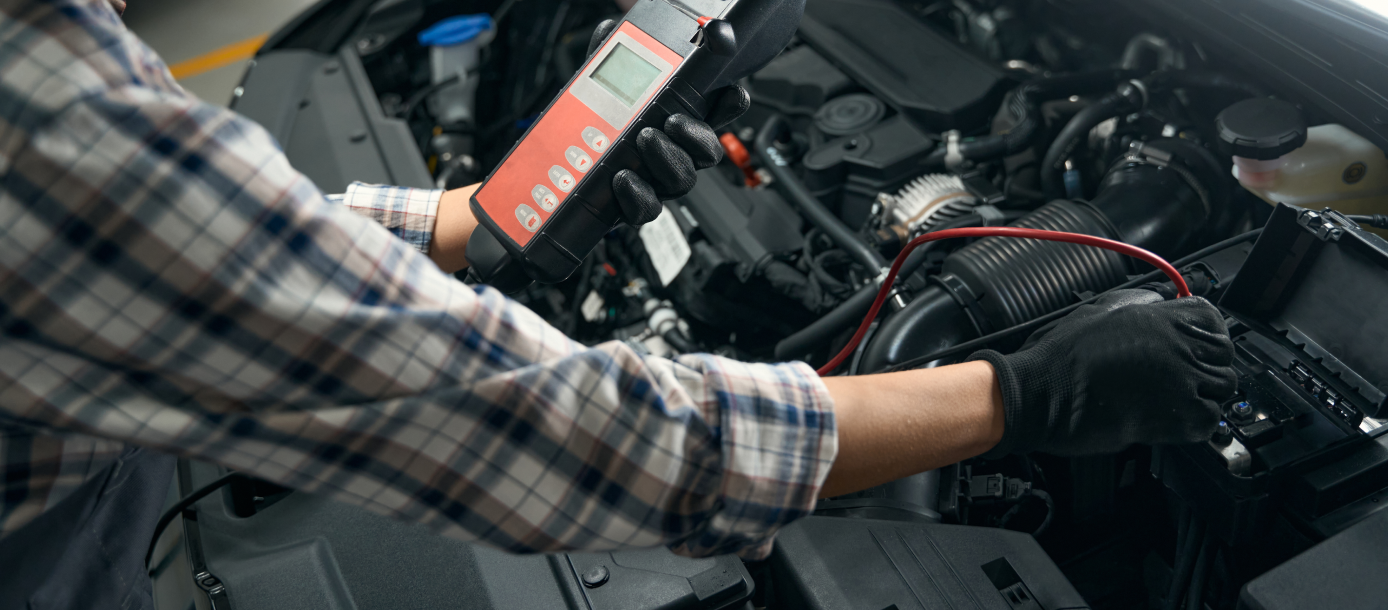
A battery test takes less than five minutes and will tell you exactly where your battery's health sits. If it's on the way out, replacing it proactively is far less disruptive than being stranded. We offer full car battery replacement in Caboolture with quality batteries suited to your vehicle's requirements.
2. Worn Brake Pads and Deteriorated Brake Components
Brake jobs are a staple of every mechanical workshop — and for good reason. Brake pads are a wear item, meaning they're designed to be replaced at regular intervals. The frustrating thing is how many drivers wait until they hear metal grinding against metal before booking in. By that point, the rotors are often damaged too, turning a straightforward pad replacement into a significantly more expensive job.
The squealing sound most drivers are familiar with isn't just an annoyance — it's a deliberate early warning system built into the pads. A small metal wear indicator contacts the rotor when pads reach minimum thickness, producing that distinctive high-pitched squeal to prompt inspection. Responding to that squeal promptly is genuinely one of the easiest ways to avoid a larger repair bill.
Beyond pads, we also regularly see:
- Warped rotors causing pedal pulsation and vibration under braking
- Seized callipers causing uneven wear and a constant dragging sensation
- Deteriorated brake fluid compromising pedal feel and stopping performance
- Soft or spongy pedal from air in the brake lines
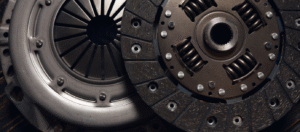
Brakes should be inspected at every service as a minimum. If you're hearing, feeling, or smelling anything unusual from your brakes, our brake and clutch repair service in Caboolture will get them sorted properly.
3. Engine Oil Issues — Leaks, Low Levels, and Overdue Changes
Engine oil problems come in a few different forms, but they all share the same consequence: accelerated engine wear. Oil is the lifeblood of your engine. It lubricates moving parts, helps regulate temperature, carries contaminants to the filter, and protects internal surfaces from metal-to-metal contact. When oil levels drop too low, or when oil is left in service too long and degrades, the engine pays the price.
The most common oil-related issues we see include:
- Overdue oil changes: Old oil loses viscosity and becomes thick, sludgy, and full of contaminants. Regular logbook servicing keeps oil fresh and your engine protected.
- External oil leaks: Seals and gaskets degrade over time, allowing oil to escape. Common leak points include the rocker cover gasket, sump plug, and crankshaft seals. A small drip on the driveway is worth investigating before it becomes a significant loss.
- Oil burning: Worn piston rings or valve stem seals allow oil to enter the combustion chamber and burn with the fuel mixture. Blue or grey exhaust smoke is the telltale sign. This typically points toward engine repairs if left unaddressed.
- Low oil between services: If you're regularly topping up oil between services, your engine has a problem worth investigating — not a habit worth maintaining.
Checking your oil level with the dipstick every few weeks is one of the simplest and most valuable maintenance habits you can develop. It takes 60 seconds and can alert you to a developing problem long before any dashboard light does.
4. Tyre Wear, Pressure, and Alignment Problems
Tyre-related issues are incredibly common and, frankly, often completely invisible to drivers until we point them out during a service. Most people check their tyres about as often as they check their roof gutters — not very often, and usually only when something's already wrong.
The issues we see most regularly:
- Under-inflated tyres: The most common tyre problem in Australia. Under-inflation causes excessive heat buildup, accelerated tread wear on the outer edges, increased fuel consumption, and reduced handling. Tyre pressure should be checked monthly and adjusted to the vehicle placard specification (usually found on the driver's door jamb).
- Uneven tread wear: Wear that's heavier on one side of the tyre, in the centre, or in patches often points to alignment, inflation, or suspension issues — not just the tyres themselves.
- Worn tread depth: The legal minimum in Australia is 1.6 mm, but braking performance degrades noticeably well before you reach that threshold. Check tread depth regularly and don't push tyres past their useful life.
- Wheel alignment out of specification: Poor alignment causes rapid uneven tyre wear, steering that pulls to one side, and a car that feels unstable at highway speeds. Alignment should be checked after any significant impact — hitting a kerb, going through a pothole hard, or after suspension work.
Tyres are your car's only contact with the road. They deserve more attention than most drivers give them.
5. Cooling System Failures
The cooling system keeps your engine operating within its safe temperature range. When it fails — whether through a leak, a faulty component, or simple neglect — the consequences can be severe and expensive. Overheating is one of the leading causes of major engine damage in Australian vehicles, particularly given Queensland's climate.
Common cooling system problems we encounter include:
- Low or contaminated coolant: Coolant should be checked regularly and flushed according to the manufacturer's schedule — typically every two years. Old coolant loses its protective properties and can cause corrosion inside the cooling system.
- Radiator leaks: Small leaks at hose connections, the radiator core, or overflow tank are common in older vehicles. They're easy to miss until the level drops enough to cause overheating.
- Failing thermostat: A thermostat stuck closed prevents coolant from circulating properly, causing rapid overheating. One stuck open keeps the engine running too cool, affecting efficiency and performance.
- Water pump failure: The water pump circulates coolant through the system. When it fails, coolant stops moving and temperature rises quickly. A leaking water pump or one making a whining sound should be investigated immediately.
- Blown head gasket: Often the end result of an overheating event that wasn't dealt with quickly enough. White exhaust smoke, coolant loss without visible leaks, and a milky appearance in the oil are all indicators.
If your temperature gauge starts climbing above normal, or if you notice any coolant loss between services, bring the vehicle in for a cooling system inspection before the situation escalates.
6. Suspension and Steering Wear
Queensland roads — particularly in growth corridors like Caboolture, Morayfield, and Burpengary — aren't always kind to suspension components. Speed humps, rough surfaces, and the sheer volume of kilometres driven all take their toll on ball joints, tie rod ends, shock absorbers, and control arm bushes over time.
Suspension wear tends to creep up gradually, which is part of why it so often goes unnoticed. Drivers adapt to the gradual changes in how the car feels, not realising how far it's drifted from how it should feel.
Signs that suspension or steering components need attention:
- Excessive bouncing or body roll through corners
- A clunking or knocking sound over bumps or during turning
- Steering that feels loose, vague, or requires constant small corrections
- Uneven or rapid tyre wear
- The vehicle sitting noticeably lower on one corner
- Vibration through the steering wheel at certain speeds
Worn suspension doesn't just affect ride comfort — it affects braking distances, vehicle stability, and tyre wear. A comprehensive suspension inspection in Caboolture will identify exactly what needs attention and what still has service life remaining.
7. Transmission and Gearbox Problems
Transmission problems are among the more expensive repairs a driver can face, which makes early detection all the more important. Whether you drive an automatic or a manual, your gearbox is a complex and hard-working component — and like most complex things, it communicates clearly when something isn't right.
Common transmission issues we see in the workshop:
- Delayed or rough gear changes: An automatic that hesitates, clunks, or jerks between gears is showing signs of stress. This can be caused by low or degraded transmission fluid, worn clutch packs, or valve body issues.
- Slipping gears: The transmission unexpectedly drops out of gear or struggles to stay in the selected ratio. In a manual, this often indicates worn synchro rings or a failing clutch. In an automatic, it typically points to fluid condition or internal wear.
- Fluid leaks: Transmission fluid is bright red when new and darkens with age and heat. A red fluid patch under the vehicle near the centre or rear is a strong indicator of a transmission leak.
- Burning smell: Degraded or overheated transmission fluid has a distinctive burnt smell. This indicates the fluid is past its useful life and the transmission may be running hot.
- Warning lights: Many modern vehicles have transmission-specific warning indicators. These should always be followed up with a diagnostic scan.
The most effective preventative step for your transmission is keeping the fluid fresh and at the correct level. Our transmission service in Caboolture covers full fluid inspection and replacement, filter servicing, and a thorough assessment of gearbox health.
8. Air Conditioning Faults
This one might seem less critical than the others, but in Queensland — where summer temperatures regularly push past 35 degrees — a broken air conditioner is no small inconvenience. It's also a surprisingly common problem, particularly in vehicles over four or five years old.
The most frequent aircon complaints we hear:
- Not cooling effectively: The most common cause is low refrigerant gas due to a slow leak somewhere in the system. A regas will restore cooling performance, but the leak needs to be identified and repaired to prevent it recurring.
- Unusual noises when the aircon is on: A rattling, clicking, or screeching sound when the aircon engages typically points to the compressor or compressor clutch.
- Musty or unpleasant smell from the vents: Mould and bacteria can build up on the evaporator core inside the cabin — particularly if the aircon isn't used regularly. A cabin air filter change and evaporator clean will sort this out.
- Aircon only works intermittently: Often an electrical fault — a faulty pressure switch, relay, or control module — rather than a refrigerant issue.
- No aircon at all: Complete failure could be a blown fuse, a failed compressor, or a significant refrigerant loss. A diagnostic check will identify the cause quickly.
Don't put up with an ineffective aircon through a Queensland summer. Our car air conditioning service in Caboolture covers everything from a routine regas through to full system diagnostics and component replacement.
The Common Thread — And the Best Auto Repair Tip We Can Give
If there's one piece of auto repair advice that runs through every single problem on this list, it's this: none of them benefit from waiting. Every one of these common car problems starts small, gives early warning signs, and becomes progressively more expensive the longer it's ignored. A battery test costs nothing. A brake squeal addressed early costs a fraction of what a rotor replacement adds. An oil leak caught and sealed early prevents the kind of engine wear that costs thousands to repair.
Regular servicing is the foundation that catches most of these problems before they escalate. A thorough mechanic doesn't just change your oil — they inspect your vehicle comprehensively and flag developing issues while they're still manageable. That's exactly how we approach every service at Garry's Mechanical.
Why Caboolture Drivers Bring Their Cars to Garry's Mechanical
We've been working on vehicles across Caboolture, Morayfield, Burpengary, Bribie Island, and North Brisbane long enough to know what local drivers need from their mechanic: honesty, experience, fair pricing, and work done properly the first time. That's what we deliver, every time a vehicle comes through our doors.
Our services cover everything on this list and more — logbook servicing, battery replacement, brake and clutch repairs, engine diagnostics, engine repairs, suspension repairs, transmission service, car air conditioning, Roadworthy Certificates (RWC QLD), fleet maintenance, and pre-purchase car inspections. View our complete services page or learn more about our team.
Book a Service or Inspection in Caboolture Today
Whether you've spotted one of the warning signs above, you're overdue for a service, or you'd just like peace of mind that your vehicle is in good shape — we're here to help. No pressure, no unnecessary upselling — just honest, thorough mechanical work from a team that genuinely cares about getting it right.
- 📞 Call us: 07 5495 4899
- 📧 Email us: info@garrysmechanical.com.au
- 📍 Visit us: 1/7 Machinery Parade, Caboolture QLD 4510
- 🕐 Open hours: Monday – Friday, 7:30 AM – 4:30 PM
Book your car service or inspection in Caboolture today — and let our experienced local mechanics keep your vehicle running the way it should.
FAQs
1. What are the most common car problems in Australia?
The most frequently seen common car problems include dead or failing batteries, worn brake pads, engine oil issues, tyre wear and pressure problems, cooling system faults, suspension wear, transmission problems, and air conditioning failures. Most of these develop gradually and give clear early warning signs. Regular logbook servicing is the most effective way to catch these issues before they become costly repairs — our team at Garry's Mechanical inspects all of these systems at every service.
2. How can I avoid expensive car repair bills?
The single most effective piece of auto repair advice is to stay on top of regular servicing and act on warning signs early. Most major repair bills are the result of smaller, cheaper problems that were ignored until they caused secondary damage. Checking your oil level regularly, keeping tyres properly inflated, responding to unusual noises promptly, and sticking to your vehicle's logbook service schedule will significantly reduce the likelihood of unexpected breakdowns and large repair costs.
3. How do I know if my car needs a service or just a repair?
A service is scheduled preventative maintenance — oil changes, filter replacements, fluid checks, and a vehicle inspection carried out at regular intervals. A repair addresses a specific fault or failed component. In practice, the two often overlap: a thorough service will identify repairs that are needed, and a repair visit often reveals that a service is also overdue. If you're unsure what your car needs, call us on 07 5495 4899 and we'll help you work out the best starting point.
4. Can Garry's Mechanical service all makes and models?
Yes — our team services all makes and models of passenger vehicles, SUVs, utes, and light commercial vehicles. We carry out full logbook servicing that maintains your new car warranty without the dealership price tag, as well as general servicing and repairs for vehicles of all ages. Whether you drive a Japanese, European, Korean, or Australian-built vehicle, we have the experience and equipment to look after it properly. Get in touch to book your vehicle in today.